
Three Questions for Any AI Vendor
Before you sign a contract for an AI solution, ask these three questions to protect your budget, your data, and your competitive edge.
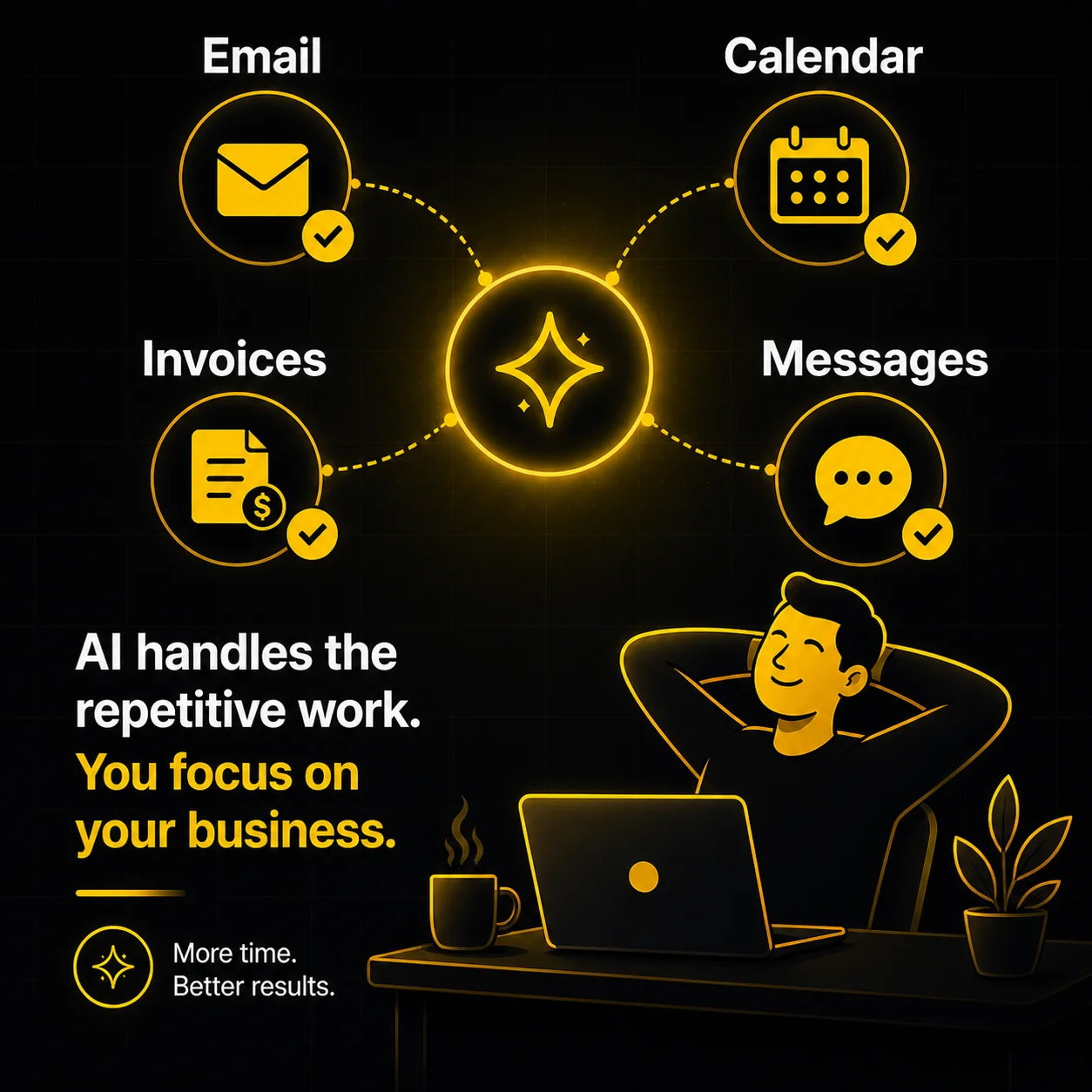
AI vendors are everywhere right now. They show up in your inbox, at industry events, and increasingly in conversations with your bank, your accountant, and your software providers. Every one of them promises time savings, revenue growth, and a competitive advantage you cannot afford to miss.
Some of those promises are real. Many are not. The good news is that you do not need a technical background to tell the difference. You just need to ask the right questions before you sign anything.
Here are the three questions that will separate a genuine AI for small business solution from a polished sales pitch.
Question One: What Does This Actually Do Inside My Business?
This sounds obvious, but most vendors answer it with a demo that shows their best case scenario on fictional data. Push past the demo. Ask them to describe, in plain language, the exact steps their tool takes once it connects to your systems.
Specifically, you want to know:
- What data does it read, and from which of your existing tools?
- What decision does it make or assist with on your behalf?
- What does a human on your team still need to review or approve?
The reason this matters is that AI automation for business works best when it handles a narrow, well defined task. A tool that promises to "transform your operations" is describing a project, not a product. A tool that promises to automatically flag customer orders that are at risk of being late, then draft a proactive email to the customer for a team member to review and send, is describing something you can actually evaluate and measure.
If a vendor cannot walk you through the specific workflow step by step, that is a strong signal they are selling aspiration rather than software.
Question Two: How Will I Measure Whether This Is Working?
A good AI solution comes with a clear answer to this question before you buy it. A vendor who shrugs, pivots to testimonials, or tells you the results take time to materialize is asking you to take a leap of faith with your budget.
You want a short list of metrics that connect directly to outcomes your business already tracks. For example:
- Average time to resolve a customer service ticket
- Number of hours per week saved on a specific manual task
- Conversion rate on a specific marketing campaign
- Error rate on a process the tool is meant to improve
According to research from McKinsey's QuantumBlack team, one of the most common reasons AI initiatives underdeliver is that organizations never defined what success looked like before deployment. Setting a measurable baseline upfront is not bureaucracy; it is the only way to know whether you are getting your money's worth three months from now.
Ask the vendor to commit to a 90 day check in where you review those numbers together. If they hesitate, ask yourself why.
Question Three: Who Owns the Data, and Where Does It Go?
This is the question most business owners forget to ask until something goes wrong. When you connect your customer records, your sales data, or your operational systems to an AI tool, that data goes somewhere. You need to know exactly where.
The answers you are looking for:
- Storage location: Is your data stored on the vendor's servers, a third party cloud, or your own infrastructure?
- Training use: Does the vendor use your data to improve their AI models? If so, could your proprietary information surface in another customer's results?
- Portability: If you cancel, can you export your data cleanly, or does it stay locked in their system?
- Breach notification: What is their obligation to tell you if something goes wrong?
These are not paranoid questions. They are standard due diligence, the same kind you would apply to any software vendor handling sensitive business information. An AI powered customer experience tool that ingests your customer purchase history deserves at least as much scrutiny as your payroll software.
Reputable vendors will have clear, written answers to all of these. If the contract language is vague or the salesperson cannot point you to a data processing agreement, treat that as a red flag.
A Bonus Filter: Does This Vendor Know Your Industry?
Once a vendor passes those three questions, apply one more filter. Ask whether they have worked with businesses similar to yours, in size, in industry, or in the specific problem they are solving.
Generic AI tools can be valuable, but the implementation almost always requires someone who understands the context of your business. A data consulting services partner who has helped a retail operation automate inventory alerts understands something a general software company does not: that the edge cases in your data are usually where the real problems hide.
You are not looking for a vendor who has a case study in your exact niche. You are looking for one who can speak fluently about the real world messiness of your kind of business, not just the clean version of it.
The Bottom Line
AI is a genuinely powerful tool for small and mid sized businesses. The vendors selling it range from exceptional to opportunistic, and the gap between them is not always obvious from a demo. These three questions will not guarantee a perfect purchase, but they will eliminate most of the bad ones before you spend a dollar.
Ask what it actually does. Ask how you will measure it. Ask who owns the data. Then listen carefully to how comfortable the vendor is answering all three.
If you want a second opinion before signing a contract, or if you are trying to figure out which AI solution is the right fit for your specific business goals, we are here to help.