
Where to Start With AI Automation
Not every part of your business should be automated. Learn which workflows AI handles brilliantly and which ones still need a human in the loop.
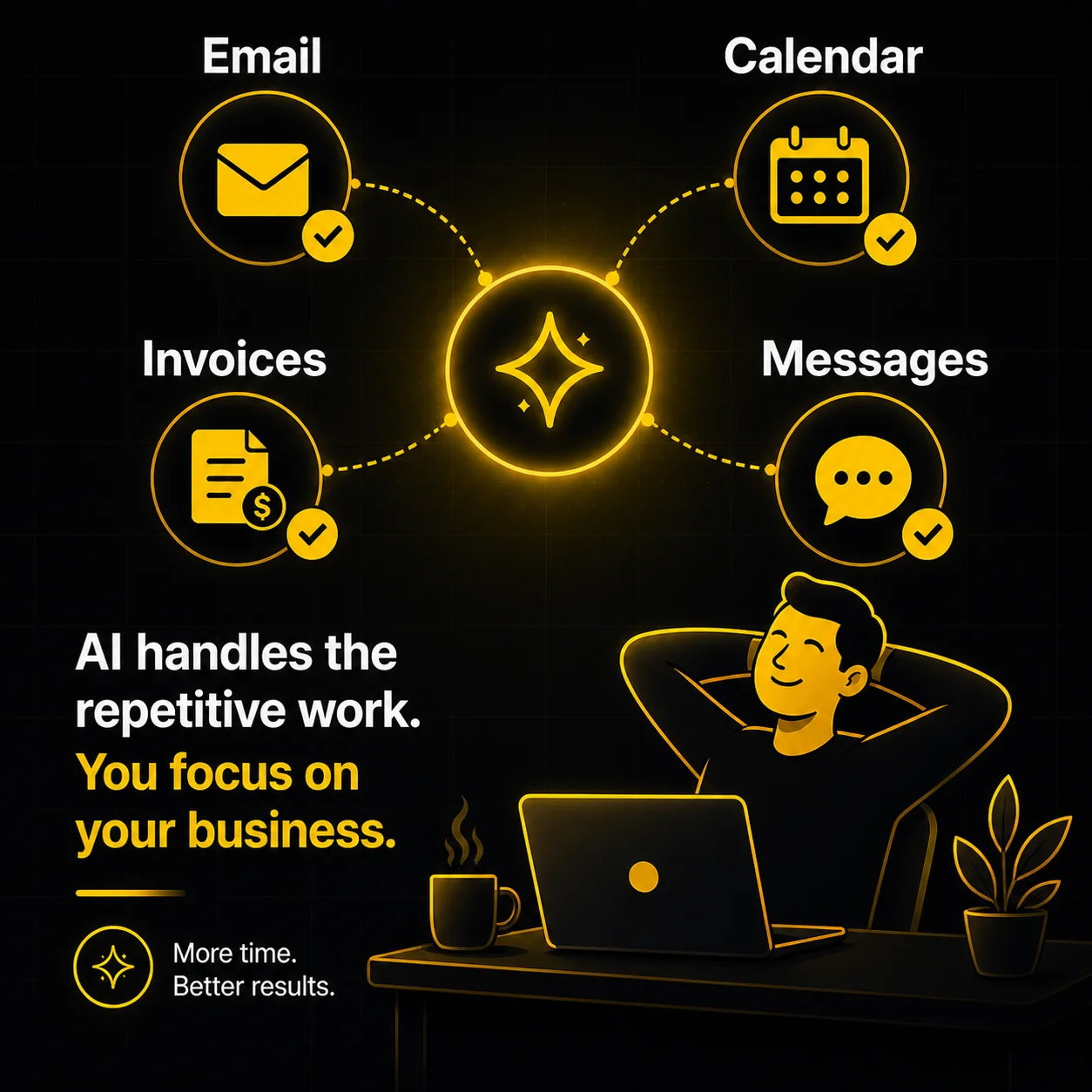
AI automation for business is one of the most talked about topics in every industry right now. But the conversation usually skips the most important question: where do you actually start? Jumping in without a plan wastes money, frustrates your team, and can quietly damage the customer experience you have spent years building.
This guide gives you a practical framework for identifying which parts of your business are ready for AI today and which ones you should leave in human hands, at least for now.
The Simple Test: Repetitive, Rule Based, and Data Rich
AI performs best on tasks that share three qualities. They happen often, they follow a predictable pattern, and they involve information that already lives somewhere in your business. If a task checks all three boxes, it is almost certainly a strong candidate for automation.
Think about the work your team does every week that feels like copying and pasting. Scheduling follow up emails. Categorizing incoming support tickets. Pulling the same numbers from the same reports. These tasks eat hours without adding creative value, and that is exactly where AI earns its keep.
According to McKinsey's QuantumBlack research team, roughly 60 to 70 percent of work activities across industries could be automated using current AI capabilities. That number is striking, but it does not mean you should automate everything at once. It means the opportunity is large and you need to be selective about where you start.
The Best Places to Start With AI Automation
Here are the areas where small and mid sized businesses consistently see fast, measurable returns:
- Customer service and support: AI customer service tools can handle common questions around the clock, route complex issues to the right person, and draft responses for your team to review and send. This cuts response times dramatically without adding headcount.
- Marketing content and scheduling: AI marketing tools can generate first drafts of emails, social posts, and product descriptions. Your team still approves and refines the copy, but the blank page problem disappears.
- Lead follow up and CRM data entry: AI agents for business can log call notes, update contact records, and trigger follow up sequences automatically. Sales teams reclaim hours every week that used to disappear into admin work.
- Internal reporting and dashboards: Business intelligence solutions powered by AI can pull data from multiple sources and surface the numbers that matter, without anyone running a manual export every Monday morning.
- Appointment and calendar management: Scheduling back and forth is a perfect candidate for automation. AI handles the logistics; your team focuses on the meeting itself.
These are not exotic use cases. They are available today through tools many businesses are already paying for but underusing.
Where AI Can Help But Should Not Lead
Some parts of your business benefit from AI assistance without full automation. Think of these as areas where AI does the research and your team makes the call.
- Pricing strategy: AI can analyze competitor pricing, flag market trends, and model scenarios. But the final pricing decision involves brand positioning, customer relationships, and strategic trade offs that need a human perspective.
- Hiring decisions: AI can screen resumes and schedule interviews efficiently. It should not make the final call on who joins your team. Culture fit and judgment calls belong with people.
- Contract negotiation and legal review: AI tools can summarize documents and highlight unusual clauses quickly. A qualified professional should still review anything with legal or financial weight.
- Major customer escalations: When a longtime customer is upset or a big account is at risk, a human response is not just better; it signals that you value the relationship.
The pattern here is straightforward. AI is a strong analyst and a tireless executor. It is not a relationship builder or a judgment maker when the stakes are high.
What You Should Leave Alone for Now
There are also areas where automation creates more risk than reward, at least at this stage of the technology.
Anything that requires deep empathy belongs in human hands. Delivering difficult news to a customer, managing a team member through a performance issue, or responding to a community crisis are moments where the wrong tone can cause lasting damage. AI does not yet read emotional context reliably enough to be trusted here without close supervision.
Similarly, creative strategy at the brand level should stay human led. AI can generate options and accelerate execution, but the vision for where your brand is going needs to come from people who understand your values, your market, and your ambitions.
Finally, be cautious about automating any process that is already broken. If the workflow is unclear or inconsistent, automating it will simply produce errors faster. Fix the process first, then consider whether AI can help you run it more efficiently.
How to Build Your AI Business Plan One Step at a Time
You do not need a large budget or a technical team to get started. A practical business AI plan begins with one honest question: where is my team spending time on tasks that follow the same pattern every single time?
Start by listing five to ten recurring tasks that feel administrative rather than strategic. For each one, ask whether it is repetitive, rule based, and data rich. The tasks that score highest on all three are your starting point.
Pick one. Pilot it with a small team. Measure the time saved and check whether quality holds up. Once you have a working example inside your own business, the case for expanding becomes much easier to make to your team and to yourself.
The businesses building a real competitive advantage with AI right now are not the ones automating everything. They are the ones being deliberate, starting where the return is clearest, and learning as they go.
If you would like help identifying the highest value automation opportunities in your business, we are happy to walk through it with you.